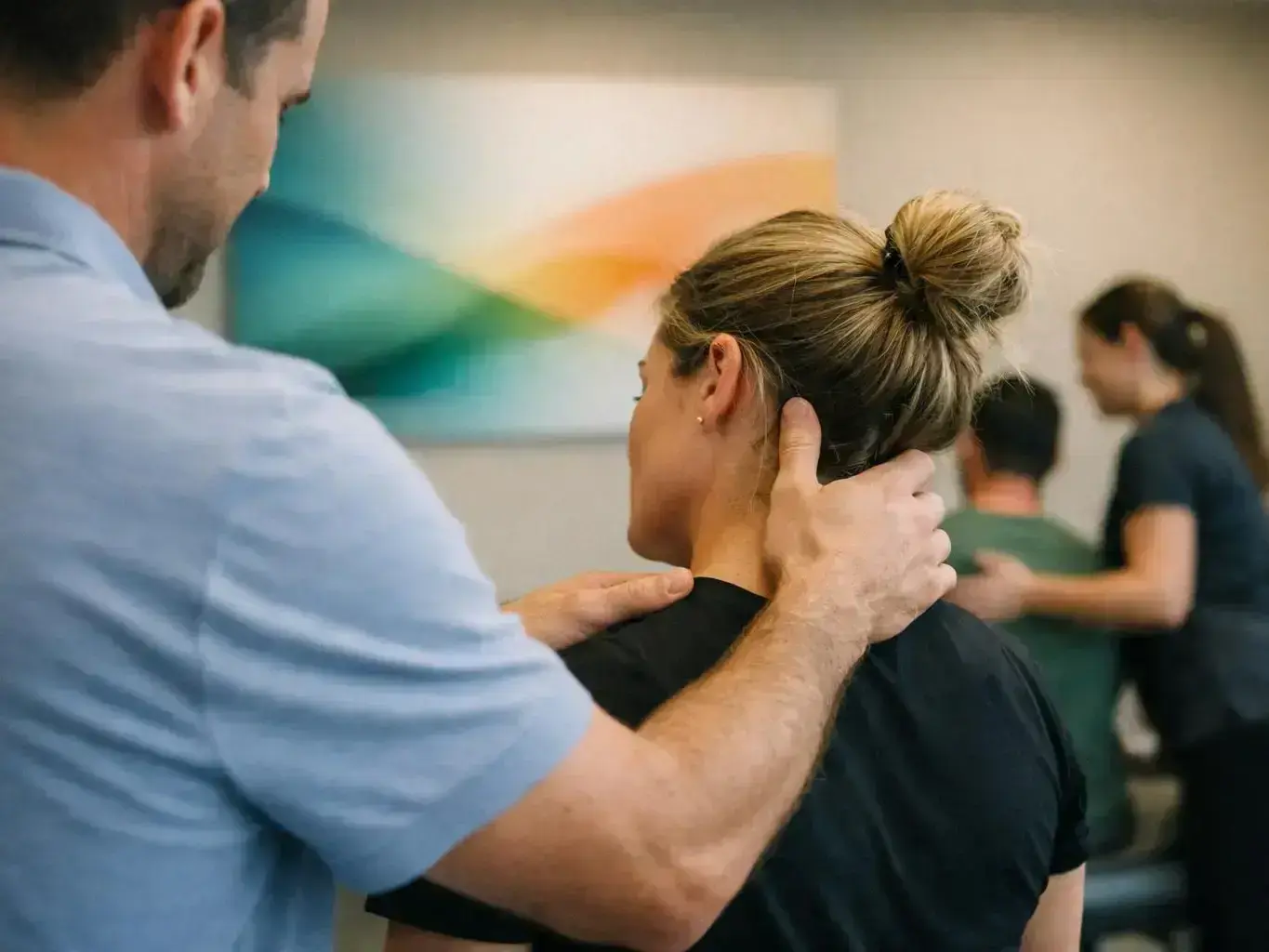
Disc Herniation is a spinal condition where the soft inner gel of a spinal disc leaks through a tear in its tough outer layer. This leakage can press on nearby nerves, causing pain, numbness. Or weakness in the back, neck, arms. Or legs. Disc herniations often occur in the lower back or neck due to injury, aging. Or strain.
Category
Spinal injury
Used for
Diagnosing nerve-related pain or weakness
Common confusion
Often mistaken for muscle strain or arthritis
Also called
Herniated Disc, Slipped Disc
Often discussed with
Back Pain Treatment, Work Injury Treatment

A disc herniation happens when the soft center of a spinal disc pushes out. The spine has bones called vertebrae. Between these bones are discs that act like cushions.
Related glossary terms: Nerve Compression, Spinal Decompression, Chiropractic Care.
These discs absorb shock. They help the spine move smoothly. Over time, discs can wear down or get hurt.
Injury, strain. Or aging can damage them. When the soft center leaks out, it can press on nerves. This causes pain, tingling. Or weakness.
Most disc herniations happen in the lower back or neck. The lower back holds much of the body's weight. That makes it easy to hurt.
The neck moves a lot. Poor posture or sudden moves can strain it. Herniations are common in adults aged 30 to 50.
Discs lose water and flexibility as we age. But not all herniations cause pain. Some people don't even know they have one.
A doctor starts with a physical exam. They ask about pain, numbness. Or weakness. They check reflexes and muscle strength.
They may test how well you can move. If they think it's a herniation, they'll order tests. X-rays show bones but not discs.
MRIs give clear pictures of soft tissues. They show discs and nerves. CT scans can also help.
Treatment often starts without surgery. Rest and ice can help with mild pain. Over-the-counter medicines work too.
Physical therapy or chiropractic care may help. Exercises can strengthen back and core muscles. This supports the spine.
If pain doesn't go away, doctors may try other things. Stronger medicines or shots can help. Surgery removes the herniated part.
Surgery is only for bad cases. It's used if other treatments don't work. It's also used if nerves are badly hurt.

Disc herniation can hurt daily life. Pain or numbness makes work hard. Simple tasks like sitting or lifting can hurt.
If not treated, it can cause long-term pain. Nerves can get damaged for good. Early treatment helps avoid this.
Many people feel better without surgery. Chiropractic care or therapy can help. They don't need invasive treatments.
Herniations can affect mental health too. Long-term pain causes stress. It can lead to anxiety or sadness.
Pain can keep you from sleeping. It can stop you from doing things you love. Early care helps with this.
Knowing the signs helps you get help. You can change habits to help your spine. This keeps you healthy.
Disc herniation needs quick care in some cases. Pain down arms or legs means nerves are hurt. See a doctor fast.
Sudden weakness is serious. Loss of bladder or bowel control is an emergency. So is numbness in the saddle area.
This is called cauda equina syndrome. It needs care right away. Without it, nerves can be damaged for good.
People with hard jobs or active lives need to be careful. Athletes and construction workers are at risk. So are office workers who sit a lot.
Repeated stress or bad posture can cause herniations. Prevent them with good habits. Lift the right way.
Use a good chair at work. Exercise often. If hurt, get help early. This helps you get back to normal faster.

A bulging disc occurs when the disc’s outer layer extends outward without tearing. While a herniation involves a tear that allows inner material to leak out.
Spinal stenosis is a narrowing of the spinal canal, often due to aging. While disc herniation involves a disc’s inner material pressing on nerves.
Muscle strain causes localized pain in soft tissues. While disc herniation typically causes radiating pain due to nerve compression.
Disc herniations often improve with conservative care. But persistent symptoms like progressive weakness or loss of sensation warrant further evaluation. Early intervention can prevent long-term nerve damage and reduce the need for surgery.
A 42-year-old office worker begins experiencing sharp pain in their lower back that radiates down their right leg. After sitting for long periods, the pain worsens. And they notice tingling in their foot. An MRI confirms a disc herniation in the lumbar spine pressing on a nerve. With chiropractic adjustments, physical therapy. And ergonomic adjustments, their symptoms gradually improve over several weeks.
Nerve Compression is a condition where a nerve is squeezed or pressed by surrounding tissues like bones, muscles. Or tendons. This pressure can disrupt nerve function, causing pain, tingling, numbness. Or weakness in the affected area. Nerve Compression often occurs in the spine, wrists. Or elbows and may result from injury, repetitive motion.
Spinal Decompression is a non-surgical, motorized traction therapy designed to relieve pressure on the spine and spinal discs. Spinal Decompression gently stretches the spine, creating negative pressure within the discs to promote retraction of herniated or bulging discs and enhance nutrient flow to affected areas.
Chiropractic Care is a health profession focused on diagnosing and treating musculoskeletal disorders, especially those related to the spine. Chiropractic Care uses hands-on spinal adjustments and other manual techniques to improve joint function, reduce pain. And support the body’s natural ability to heal. It's often used for back pain, neck pain, headaches.
Inflammation is the body’s natural response to injury, infection. Or irritation, designed to protect and heal damaged tissues. It involves increased blood flow, white blood cells. And chemical signals that cause redness, warmth, swelling. Or pain. While acute inflammation is temporary and helpful, chronic inflammation can contribute to long-term health problems like arthritis or back pain.
Range of Motion is the full movement potential of a joint, typically measured in degrees of a circle. It shows how far a joint can move in different directions, like bending, straightening. Or rotating. Healthy joints have a normal range. While injuries or conditions may limit it. Chiropractors and doctors use this measure to assess joint health and track recovery.
ChiropractorBrentwoodEstates.link
Contact ChiropractorBrentwoodEstates.link for practical guidance on Disc Herniation and related chiropractor work in Brentwood Estates.